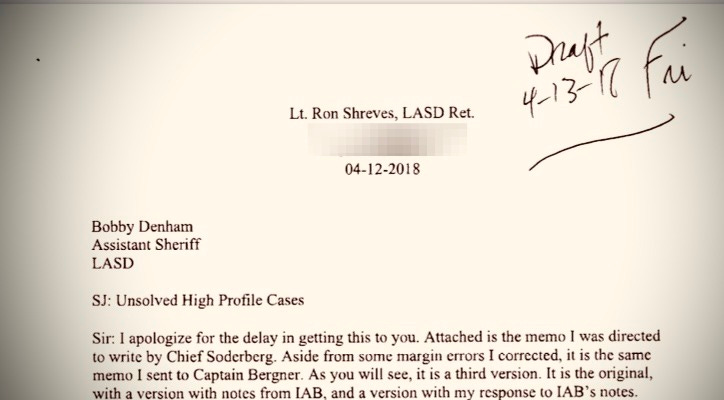
On a Friday afternoon in April of 2018, retired Lieutenant Ron Shreves of the Los Angeles Sheriff’s Department penned a letter to his boss, Assistant Sheriff Bobby Denham, titled ‘Unsolved High Profile Cases’. His meticulous choice of words and the order of events swirled around in his head; he could not convey his message quickly enough. At the same time, Shreves knew he had but one shot at this; he would list all the reasons and facts that several unsolved murders in the Antelope Valley were linked to a continuing criminal enterprise.
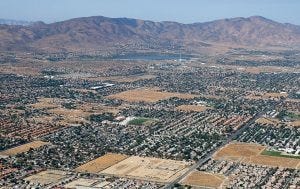
A partial aerial of the Antelope Valley [Source: Focal Flight]
Shreves composed his letter almost 18 years after he had set up a joint task force of the Sheriff’s Department and the Drug Enforcement Agency to dismantle six criminal networks in the Antelope Valley. The task force ultimately ended up arresting 300 individuals involved in methamphetamine distribution and weapons smuggling, including the criminal Thomas Dean Hinkle, aka ‘God’.
Even for a sanguine person like Shreves, the entire experience had left a bitter taste in his mouth: both he and his right-hand, the trusted and hardworking Deputy Darren Hager, were scrubbed, and Hager was made persona non grata within his own agency, the Los Angeles Sheriff’s Department, by numbers and reputation ‘the largest municipal law enforcement agency in the nation’ and the largest Sheriff’s Department in the world.
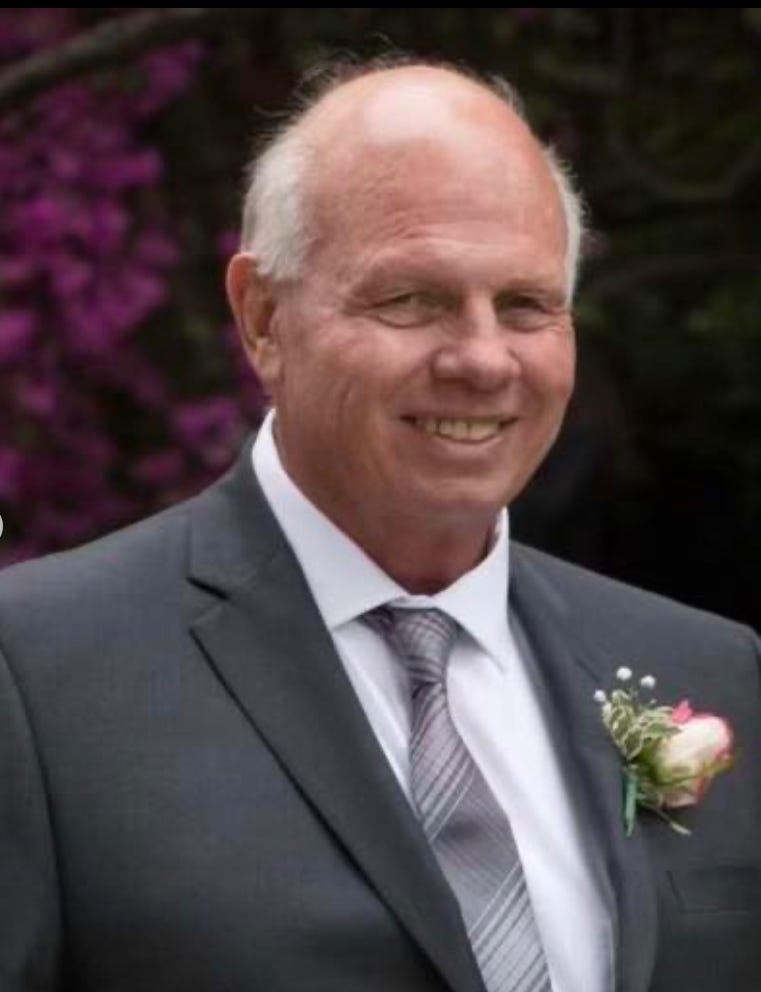
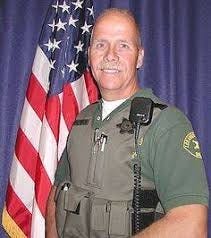
The late Lieutenant Ron Waylen Shreves [Source: LASD-Lancaster]
Shreves did what he could to defend and help his Deputy Hager, who was then being accused of falsifying witness accounts during the course of the task force as they came across evidence that ‘dirty deputies were in cahoots with criminals’ who were involved in the murder of Deputy Jon Aujay in 1998.
In the end, as indicated in Part I of this series, Deputy Darren Hager (then sworn in as a Marshall for the DEA) won a momentous whistleblower retaliation suit against his own employers. Asa Hutchinson, the head of the Drug Enforcement Agency, presented Darren Hager with an award for his work on the Silent Thunder task force.
Shreves himself was ready to retire.
He made sure to make the best of his new days and passion: he became a professor of Criminal Justice at Antelope Valley College. To this day, his students at Antelope Valley College rate Shreves and his teachings highly. According to them, he had a wicked sense of humor and a compassionate attitude. Shreves was adamant to pass on his sense of justice and teach younger generations how to conduct proper research. The task force experience and the unsolved murders during the task force, especially the murder of Deputy Jon Aujay and the retaliation of the Sheriff’s Department against its own investigators, have stayed with Shreves ever since, probably until his death in May of 2024.
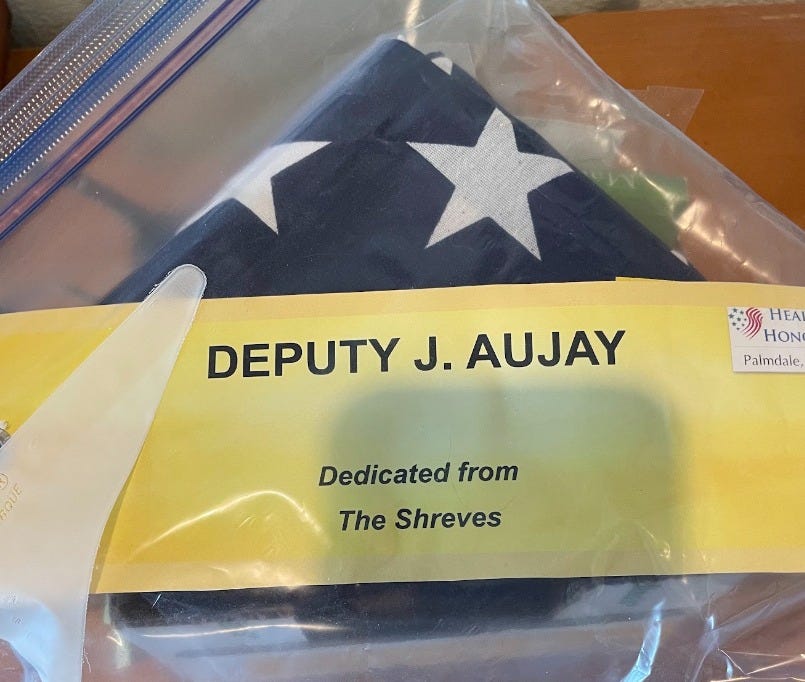
Ron Shreves dedicated a flag in honor of Sheriff’s Deputy Jon Aujay. [Source: JMB Photo Courtesy of JMB]
So on that particular Friday afternoon in 2018, it was time for Shreves to put his courage back on the horse and ask his Sheriff to finally listen to what he had to say: several high-profile murders were linked to the same criminal networks and corrupt law enforcement personnel in the Antelope Valley.
“This enterprise is likely responsible for numerous homicides and heavy narcotic trafficking.”
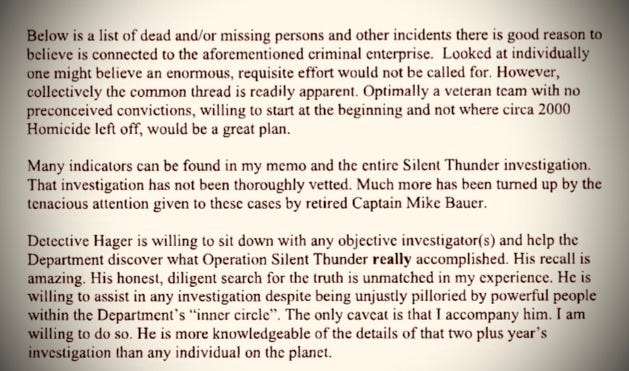
Shreves writes: “There existed in the Littlerock, Pearblossom area, an active criminal enterprise that, while somewhat diminished, still exists. That the LASD has failed to recognize this fact and has not adequately investigated that enterprise. Below is a list of dead and/or missing persons and other incidents, for which there is good reason to believe are connected to the aforementioned criminal enterprise. Looked at individually, one might believe an enormous, requisite effort would not be called for. However, collectively, the common thread is readily apparent. Many indicators can be found in my memo and the entire Silent Thunder investigation. That investigation has not been thoroughly vetted. Much more has been turned up by the tenacious attention given to these cases by retired Captain Mike Bauer.”
[Source: JMB Photo Courtesy of Mel Elorche]
Shreves urged his superiors to investigate the urgent issue, but it is unclear whether Assistant Sheriff Bobby Denham heard his plea.
In this investigative series, attempts are made to lay out the foundation of Shreves’ theory with evidence, if possible. For this investigation, hundreds of exhibits, tape recordings, audio and video transcripts, crime scene photos, trial depositions, transcripts, and (re-)interviews of persons of interest were carefully examined.
Some of the murder investigations of the seven victims as they are mentioned in this series were never properly followed through - important pieces of evidence vanished, polygraphs were left misinterpreted, one particular Homicide investigator ‘shaped’ interviews (Sergeant Joe Holmes during the Homicide investigation of Deputy Jon Aujay), reports went missing, and/or in some cases were even ignored by prosecutors and criminal defense alike.
The murders - Who are the victims? A brief overview
-Lynn Standish met her death on May 20th, 1994. When she opened the door of a microwave (in the middle of nowhere in the desert), a pipe bomb exploded. Her son survived. A suspect was charged and convicted, sentenced to life in prison. However, he is innocent, and the real killer is still alive. The meth distributor and criminal Thomas Dean Hinkle was responsible for Standish’s death, according to a deathbed statement of his wife, Gigi Sinclair. The convicted suspect is fighting for his release and the truth.
-Gary Martin Devore, who disappeared in July 1997, was found murdered in 1998. See Part I for a more detailed background. His murder most likely happened in the Mojave area, where Richard Fullbright, the leader of the Vagos Mojave Chapter, was known for his connections with Hinkle’s criminal network and dirty deputies. Vagos was a notorious motorcycle ‘club’ involved in kidnappings, assassinations, and meth distribution. Screenwriter Gary was last seen at a Denny’s diner on Sierra Highway after midnight. A waitress, by the name of Donna Booth, had served him. Ms. Booth was never properly re-interviewed by investigators. Donna Booth may be related to Mike Booth, a known associate of criminal Tom Hinkle and an associate of Resident Deputy Rick Engels. Furthermore, the police had received a tip from a certain Douglas Crawford of San Diego. Investigations into Douglas Crawford were halted, as he had hired a criminal defense attorney within 48 hours of his tip. His background is dubious. After the entire region was combed through by police and citizens, nothing was found. Yet, a year later, Douglas Crawford ends up finding ‘auto parts’ in the aqueduct and points the police to the spot where Gary and his truck were found.
Douglas Crawford may also be related to Larry Crawford, the owner of the Chevron station in Palmdale, which was under surveillance by Shreves’ task force, Silent Thunder. Criminal Tom Hinkle had his daytime job there at one point.
-Deputy Sheriff Jon Aujay disappeared on June 11th, 1998. See also Part I for a more detailed description. His disappearance and murder are central to the investigations, as mentioned here. During the Homicide investigation and the joint task force, Silent Thunder, the FBI allocated two agents to conduct interviews. The findings were never revealed. Jon Aujay was declared dead on June 11th, 2003. A FOIA request to the FBI resulted in the discovery of 485 pages of documentation, which will be released to Code of Silence.
-Michelle O’Keefe, a bright and lively college student, aged 18, was shot to death in her blue Mustang in a Park-and-Ride in Palmdale on February 22nd, 2000. Security Guard Raymond Lee Jennings was the main suspect and was later sentenced to 40 years to life in state prison. He was exonerated by the Honorable Judge William Ryan in 2017. More on Michelle O’Keefe and her unsolved murder in Part III.
-The double homicide of Phillip Privett and Majday Haddad at the V&M Market in Palmdale. Two store clerks were shot to death. The weapon was never found, and no suspects were ever found. Deputy Randell J Heberle was first on scene. See Part I for a little bit more detail.
-Rodney Catsiff - a hustling private investigator for the wrongfully convicted suspect in the murder of Lynn Standish. Rodney disappeared on September 13, 2001; his SUV was found burned out on Mt Emma Road in Angeles Forest. His daughter witnessed two people taking all his tape recordings and notes from his house. Rodney had been investigating Lynn Standish's murder and Jon Aujay’s murder; he had interviewed many witnesses. Some of these witnesses were killed or disappeared - Lyle Carter was killed by Resident Deputy Rick Engels, and witness Julie Jones disappeared.
-Resident Deputy Stephen Douglas Sorensen - brutally murdered on August 3rd, 2003. His murder will be discussed in this part.
Resident Deputy Stephen Sorensen brutally murdered
Lieutenant Ron Shreves and former Sheriff’s Captain Mike Bauer knew each other well. They discussed Bauer’s investigation into murders that could be linked to the disappearance and murder of his Deputy, Jon Aujay.
Bauer spent years interviewing hundreds of subjects in the Los Angeles area. One of them, Scott Charles Griffis, was a good friend of Jon Aujay. Scott Griffis confided in Bauer about his friendship with Deputy Aujay and his suspicions about who may have been involved with his murder, other murders, and urged Mike Bauer to look into the murder of Deputy Stephen Sorensen in August of 2003.
Soon after Griffis passed away, of natural causes as confirmed by the Los Angeles Medical Examiner and autopsy report by the coroner’s investigator, Kelli Blanchard.
Mike Bauer continued his search and interviewed then Captain Carl Deeley, Lancaster Station, and Sorensen’s boss, about what happened to Stephen Sorensen.
Mr. Deeley could not explain to Bauer why his Resident Deputy Sorensen took a call on his day off, went in uniform to a location of a ‘squatter’s disturbance’ all the way in Llano, and ended up near a trailer, where Sorensen was eventually shot and killed. Mr Deeley’s response: “Let it go, Mike."
What happened to Deputy Sorensen?
Resident Deputy Stephen Sorensen shocked the blue world when he was brutally murdered in the desert community of Llano on a blazing hot Saturday of August 2nd in 2003. His black-and-white car was abandoned, notebooks gone. Following a trail a quarter of a mile west, Sorensen was lying on his back. Shot fourteen times, his body dragged through the desert, his scalp torn.
Stephen Douglas Sorensen [Source:LASD]
The coroner’s investigator, Leilana Aranda, would later find a metal bucket with blood and brain matter. Sorensen’s brain. It was preserved in a hazmat bag. For Sorensen's fellow Deputies and officers who investigated the scene, this was an experience beyond earth-shattering.
Sorensen was Resident Deputy of Lake Los Angeles. He went out of his way on his day off to Llano. Incident aerial [Sources: Landsearch and LASD Photo Courtesy of LandSearch and LASD]
What happened to Sorensen? - According to the Los Angeles Sheriff’s Department
After Sorensen got a call on his radio at his home office in Lake Los Angeles, he headed out to see what the concern about a ‘squatter’ was about. He drove in his black and white to Llano, to a remote desert area of Littlerock/Lake Los Angeles. He had received a call from the Wirts, who owned a property with an airstrip and a watchtower. The Wirts were neighbors of the eccentric Donald Kueck, who left his regular existence for life off-grid in the desert, to become a reclusive inventor and thinker, and perhaps eventually became addicted to pain medications.
Sorensen did have a bit of a history with Kueck, as they had a previous altercation in 1994 during a traffic stop. This was settled, and Kueck had served some time in prison.
Sorensen headed out to the area where the Wirts said they had seen a squatter, who was previously served with an eviction notice.
Sorensen didn’t see anything suspicious and headed back, but before he did, he passed Kueck’s trailer. According to events as laid out by Homicide Detectives, Kueck shot Sorensen through his door.
Shots were heard elsewhere, and a call was made to 911. Units arrived at the scene, but didn’t find Sorensen, Kueck, or anyone else. Sorensen’s radio car was found, and some blood was spotted nearby. As they followed a trail a quarter mile to the west, they saw Sorensen’s body and could not contain their shock.
What followed was a week-long manhunt for Donald Kueck, who had become the main suspect. Kueck was on the run, smart enough to hide out in the many holes of old mine shafts, and finally at someone’s house, and in a shed. At the same time, a detective’s team from the Homicide Bureau, comprising Larry Brandenburg, Mark Lillienfeld, Joe Purcell, Phil Guzman, and Eddie Brown, contacted Kueck’s only daughter.
They taped a recorder at the back of her cellphone in case Kueck would contact her.
And he did. In her first conversation with her dad, Rebecca asks if Kueck had killed Sorensen.
As quoted in “Desert Reckoning" written by Deanne Stillman, Kueck is quoted as answering his daughter: “No. Two tweakers broke in while I was out shooting snakes. They stole my car.”
Kueck knew the cops would come for him because he had an old altercation with Sorensen. “They will blame me.” He would not be believed.
Neither author Deanne Stillmann nor her agent in New York agreed to comment or answer questions about Stillmann’s book on Sorensen. In her book “Desert Reckoning” among the thank-yous to subjects and sources listed are Richard Fullbright, leader of the Vagos Mojave Chapter, and Deputy Randell J Heberle. Neither men are quoted in her book, nor is it clear what their contribution was to her book.
The manhunt ended in a blistering stand-off. While the SWAT teams were ready to take down Kueck outside of his hideout, Detective Sergeant Mark Lillienfeld functioned as the hostage negotiator. He talked to Kueck for hours. Then Sheriff Lee Baca allowed the Special Enforcement Bureau teams to use road flares to smoke out their main suspect and take him down.
The wanted and the stand-off. Kueck's death was ascribed to multiple firearms wounds [Source: Los Angeles Sheriff's Department. Department of Coroner Photo Courtesy of LASD/Mel Elorche]
The tape recordings of the phone conversations between Donald Kueck and Sergeant Mark Lillienfeld are currently part of a PRA request at the LASD ( Lt. Camacho of Homicide Bureau).
LASD claimed Kueck admitted on tape that he had killed Sorensen, so there was reasonable evidence for LASD to smoke him out and perforate his body. He was found burned to a crisp with Sorensen’s Beretta, portable radio, and a .38 revolver found nearby.
Internal Affairs Bureau (IAB), the Office of Independent Review, and the Los Angeles District Attorney’s Office all ordered a review of the tactics used by SEB in the stand-off and killing of the main suspect, Donald Kueck. The tactics were found lawful.
“Based on the evidence, we find that the tactics employed, albeit unique, were resourceful, and the level of force utilized by law enforcement personnel at the scene was both reasonable and lawful under the circumstances,” wrote Deputy Dist. Atty. Michael Mallano.
With Donald Kueck dead and an internal investigation closed, the murder of Deputy Stephen Sorensen seemed solved. Not quite.
Thanks for reading! This post is public so feel free to share it.
What was little known to many of his fellow LASD Deputies and investigators was that Stephen Sorensen was involved in a defamation lawsuit against four local council members of Lake Los Angeles. He had filed that suit on February 25th, 2003, seven months prior to his death.
Sorensen felt ‘threatened’ as his attorney, Lawrence Glasner, tells the author over the phone.
Mr. Glasner: “That case was so difficult. I tell you one thing about Steve, he was kind. He was a wonderful man. Self-righteous, yes, he was an uncompromising man. But he was kind. The case was very hard on him. A few days before he was murdered, he called me out of the blue when I was driving to Bakersfield. He knew that the roads and the traffic at that time could be dangerous, so he called me to take care and told me what exactly I needed to look out for. That is how he was.”
So what is up with this defamation lawsuit? According to Stephen Sorensen’s declaration, four council members of Lake Los Angeles, specifically one council member, Shirley Harriman, had started to call him as soon as he had settled in as Resident Deputy. His declaration is as follows:
Sorensen: “ Shortly after being assigned to the position of resident Deputy, I received an unsolicited phone call from a Shirley Harriman. The substance of this first conversation was centered on her telling me that she was on a first-name basis with my station captain, Thomas Pigott, my area Commander Michael Aranda, and her association with the two area Deputies (Steven Harbeson and Frederick Hill). Her statements were laced with a high amount of profanity and apparently were intended to demonstrate her high-level connections in the Sheriff's Department. She further requested that I be interviewed by her. I agreed to interview, and during the interview, Ms. Harriman again stated that she was on a first-name basis with Captain Pigott and Commander Aranda. She also told me that she "always worked closely with Deputies Harbeson and Hill." Ms. Harriman also expected me to work "closely" and cooperate with deputies Harbeson and Hill. Ms. Harriman further added that Deputy Hill had lived at her house for a period of time and that she and her companion (Gordon McCorkle) considered Hill as their "adopted son”. Several days after my interview with Harriman, she arrived unannounced at my former residence in Lake Los Angeles. She exited her vehicle and approached my wife and me in the driveway of this location. During this unsolicited contact, Ms. Harriman discussed several issues of interest in the town and then told my wife and I the following story: she stated that before my assignment to this position, she was having problems with one of her neighbors that she identified as being a male named, "Audio Carr." She described Mr. Carr as being a "wanna be body builder and dope dealer." Ms. Harriman continued by saying that she had "solved this little problem.” She stated that "Fred,” a reference to Deputy Fred Hill, had contacted Mr. Cair at Carr's residence. During this alleged contact, she told us that Deputy Hill had threatened to, "kill him then bury his body parts in the desert." After making this statement, Ms. Harriman said, "I am never going to have any fucking problems in this town." After hearing these statements, my wife and I excused ourselves and Ms. Harriman drove away.”
Ms. Harriman and her fellow council members each gave their declarations, and the case was about to go to trial. Months later, Sorensen was murdered. It is not to say how this trial would have panned out, nor if Sorensen’s role in this dispute was partly to blame for his ambitious drive as a Resident Deputy. According to several witness accounts, Sorensen was active and helpful to many Hispanic business owners in Lake Los Angeles, but very ambitious and self-righteous. The widow of Sorensen, Christine Sorensen, eventually settled the case with all defendants.
What does stand out is that the defendant in this defamation case, Shirley Harriman, enjoyed protection from certain Deputies and law enforcement personnel.
Deputy Fred Hill was assigned to Lancaster station. Resident Deputy Rick Engels of Littlerock, who by then was already suspected of being responsible for the murder of Deputy Jon Aujay and his associations with meth distributors, mentions Deputy Hill as the one person who warned him that a member of the DEA/LASD task force was looking into dirty deputies.
In 2008, Resident Deputy Rick Engels was deposed on videotape during the whistleblower retaliation suit of Darren Hager against the Sheriff’s Department.
Engels: “Deputy Fred Hill told me that he had an informant in Lake Los Angeles that he was using for himself and that Darren Hager had contacted that informant and asked that informant if he knew any dirty cops and asked the informant about Dave Bower, who is a Deputy at Palmdale station. The informant didn’t know Dave Bower. The informant went to Fred Hill to ask what was going on, why Darren Hager was pressuring him.”
The nature of their relationship is still unclear, but it seems Deputy Fred Hill had a good reason to warn Rick Engels that people were looking into his criminal activities.
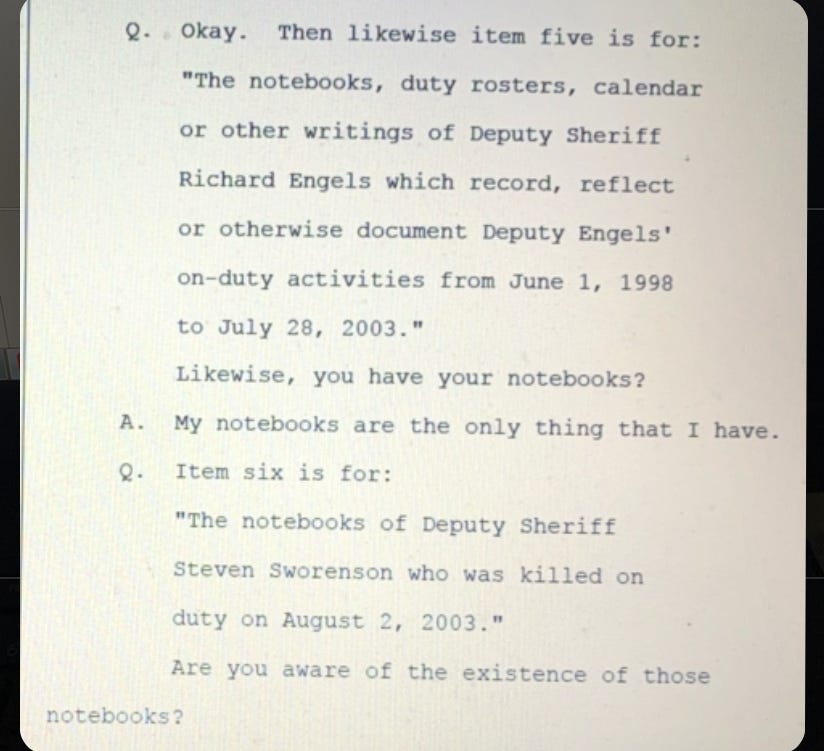
In that same videotaped deposition, Rick Engels is asked about the notebooks of Sorensen. If he knew where they were.
His answer: “No, sir.”
Transcript Deposition of Deputy Rick Engels in Hager v COLA [Photo Courtesy of Mel Elorche]
Sorensen’s Autopsy bears clues
After examining the 50-page autopsy report of Stephen Sorensen, it could be said that Sorensen was actually approached from behind and shot from behind by multiple shooters. The overkill suggests either that the killing was personal or that it was a setup.
The Coroner’s Investigator Leilana Aranda wrote in her narrative: “ There were two scenes involved. The first was the shooting scene, which was the location of the injury. This was a desert area several miles north of Highway 138 and Largo Vista Road and accessed only by dirt roads and dirt pathways. The area has been used by squatters. At the time of the shooting, this area had been in the process of chasing the squatters out. Where the shooting occurred was one such area consisting of a small travel trailer with odd and ends, junk, and other similar items around it. Approximately 10-15 feet northeast of the trailer (between the trailer and decedent's vehicle), crime lab personnel and investigators located 9mm bullet casings, 223 caliber casings, 9mm live rounds, skull fragments, hair, and a small area of blood. Two feet from the open right front passenger door of the decedent's vehicle was a large amount of brain matter. No blood or skull fragments were in this area. The travel trailer door was open.”
Autopsy report Stephen Douglas Sorensen [Source: The Department of Coroner, County of Los Angeles Photo Courtesy of Mel Elorche]
“Deputies pointed out bullet holes in the open door and in the trailer, consistent with the size of a 9mm bullet.”
“The second scene was the scene of death, where the body was found. This was an area of open desert, ¼ to ½ mile west of the shooting location. Decedent's body was found lying on the ground, off of the roadway. He was on his back with his arms on the ground and raised above his head.”
Coroner Aranda's report is comprehensive, which is expected from a Medical Examiner with 22 years of experience. She retired five years after Sorensen's murder. At that time, her husband, Michael Aranda, was Sorensen's Commander and was known to go on long runs with the late Deputy Jon Aujay.
Could Kueck have told the truth to his daughter that he didn’t kill Sorensen? Was Kueck used as a scapegoat by the real killers who may have killed Sorensen on order by someone who wanted Sorensen dead? Did Sorensen keep tabs on Rick Engels? Was he on to Engels’ criminal activities?
And what is the role of Donald Kueck’s neighbor, Wayne Wirt, in this? Why would he or his wife have called Sorensen and not Resident Deputy Rick Engels?
Wirt owned an airstrip adjacent to his property, which he frequently hired out to ‘independents’. Private airstrips in that remote area could have been used for valid travel reasons, but also possibly used by meth distributors needing to fly supplies in and out of state and/or the country.
Wayne Wirt can’t tell us his side of this story anymore, because he died in a plane crash in Washington. The plane did not explode.
The FBI was also part of the manhunt for Donald Kueck - Scott Garriola was the handling Special Agent for the Fugitive Task Force. Interestingly, the now killed suspect, Donald Kueck, kept notebooks and wrote frequently to the FBI about his concerns of law enforcement abuse.
A recent FIOA request to the FBI has resulted in the discovery of files on Donald Kueck. The release of these files is pending.
To this day, memorials for Stephen Douglas Sorensen are held every year. A park in the Antelope Valley is named after him. His son, Matthew Sorensen, was a student at Antelope Valley College and is now getting his degree in Criminal Justice.
Lieutenant Ron Shreves would have liked that very much.